

Finding your wedding dress is one of the most memorable parts of wedding planning and makes everything feel beautifully real. But before you step into a bridal boutique, there’s one very practical question to answer: When should you start wedding dress shopping?
For the most flexibility, start wedding dress shopping about 12 months before your wedding, with the goal of ordering your gown around 9 to 12 months before the wedding date. This gives you time to explore styles, place your order, choose accessories and complete alterations without feeling rushed.
That said, there is no single timeline that works for every bride. If your wedding is nine months, six months or even three months away, you still have options. Your shopping strategy may simply look a little different.
Use this month-by-month wedding dress shopping timeline to understand what to do, what to ask and what to prioritize at every stage of your bridal journey.
Wedding Dress Shopping Timeline at a Glance
| Time Before the Wedding | What to Do |
| 12+ months | Research wedding dress styles, set your budget and find bridal boutiques |
| 10-12 months | Schedule bridal appointments and start trying on wedding dresses |
| 8-10 months | Choose and order your wedding dress |
| 6-8 months | Select your veil, shoes and bridal accessories |
| 4-6 months | Prepare for your gown to arrive and plan for alterations |
| 2-3 months | Begin final fittings and refine the fit |
| 1 month | Finalize your complete bridal look |
| 1-2 weeks | Pick up, transport and safely store your gown |
12+ Months Before: Start Your Wedding Dress Research
A year or more before the wedding is an ideal time to explore what you love without putting pressure on yourself to have every detail figured out.
Start by thinking about how you want your wedding to feel. Your venue, season and overall aesthetic can give you helpful direction without dictating what you have to wear.
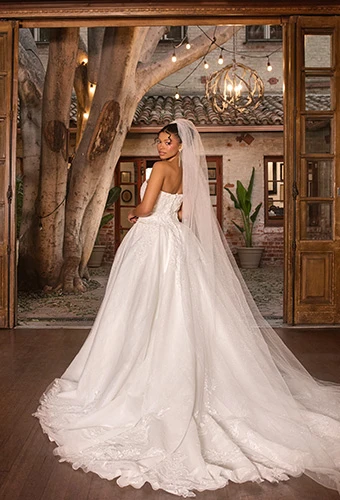
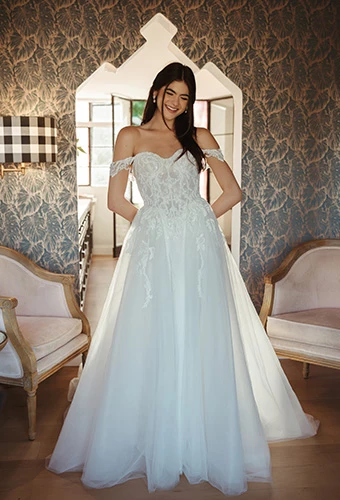
A black-tie ballroom celebration might inspire a structured ballgown or dramatic train. A garden ceremony could lead you toward dimensional floral lace and an airy A-line silhouette. For a destination wedding, you may find yourself drawn to fabrics that move beautifully and feel comfortable throughout the day.
Most importantly, start noticing what consistently catches your eye.
If terms like A-line, ballgown, sheath, mermaid and fit-and-flare begin to blur together, explore our complete guide to wedding dress styles and silhouettes before your appointment. Understanding the basics can make browsing easier without making you feel like you need to become an expert.
What to Do 12+ Months Before the Wedding
- Confirm your wedding date or approximate season
- Establish your bridal fashion budget
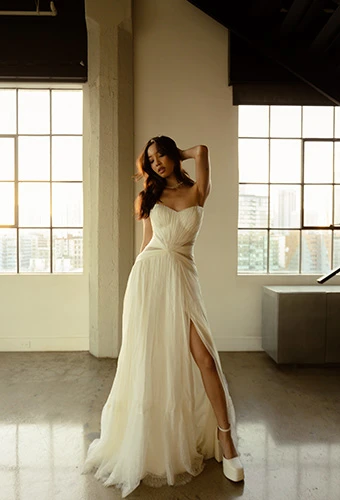
- Browse silhouettes, necklines, fabrics and design details
- Save wedding dress inspiration
- Research bridal boutiques near you
- Look for boutiques carrying designers and sample sizes you want to explore
- Consider your venue, climate and wedding-day activities
How Your Venue and Season Can Influence Your Wedding Dress
Your venue should inform your bridal look rather than limit it.
For an outdoor wedding, consider how the train will move across grass, sand or uneven terrain. For a warm-weather celebration, think about fabric weight and layers. Winter brides may want sleeves, a wrap or another styling layer for outdoor photos.
Contrast can also create a striking bridal moment. A sleek column gown can look beautiful in a romantic garden, just as a dramatic ballgown can feel completely at home in a contemporary city venue.
Choose the dress that reflects your style first, then think about how it will move through the day you are planning.
10-12 Months Before: Schedule Your Bridal Appointments
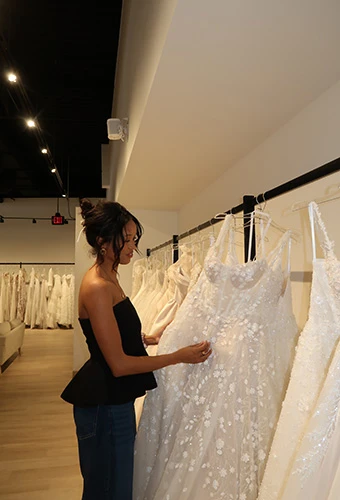
Once you have gathered some inspiration, it is time to start trying on wedding dresses. This is where online research becomes a real bridal experience.
Trying on gowns helps you understand how different silhouettes, fabrics, waistlines and necklines feel on your body. It is also completely normal for your preferences to change once you step into the fitting room. If this is your first appointment, knowing what comes next can make the experience feel much more approachable. Our step-by-step guide to what happens at a bridal appointment covers everything from meeting your stylist to trying on gowns and narrowing down your favorites.
How to Prepare for Your Wedding Dress Appointment
- Know your wedding date
- Have a realistic gown budget in mind
- Save a few inspiration images
- Tell your bridal stylist about your venue and wedding style
- Wear undergarments that make you feel comfortable trying on gowns
- Bring shoes with a similar heel height to your wedding day look
- Invite people whose opinions help you feel supported and confident
Most importantly, arrive to your bridal appointment with an open mind.
Explain what you do and do not like about the styles you have seen. Those details can be more helpful to a bridal stylist than arriving with one exact gown in mind.
For an even more detailed appointment prep list, read our wedding dress shopping tips, including what to know before you go, what to bring and how to get more from your time in the fitting room.
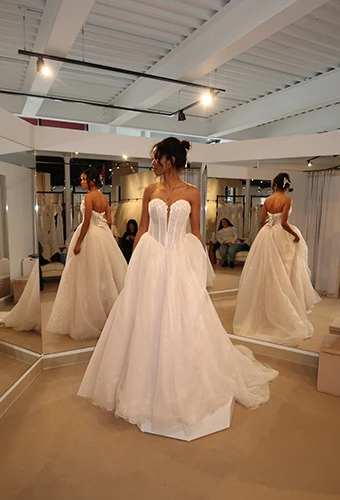
8-10 Months Before: Choose and Order Your Wedding Dress
By this stage, your bridal style may feel much clearer than it did when you began wedding planning.
You may have discovered a new silhouette. You may know exactly which neckline makes you feel most confident. Or perhaps the gown you saved months ago still feels just as special once you try it on.
When you find a wedding dress that reflects your style and works for your wedding, it is time to confirm the details and place the order.
What to Confirm Before Ordering Your Wedding Dress
- Gown style
- Ordered size
- Colorway
- Bodice or lining options, if offered
- Designer-approved customizations, if available
- Estimated delivery window
- Boutique policies
- Next steps after the gown arrives
Designer wedding dresses are often ordered specifically for the bride rather than taken home from the boutique the same day. That production period is one reason beginning the shopping process early can be helpful.
It is also important to understand that ordering your wedding dress and altering your wedding dress are separate parts of the timeline.
First, your gown is ordered and produced. After it arrives, alterations refine the fit.
Remember Your Full Bridal-Fashion Budget
Your wedding dress may be the largest part of your bridal-fashion budget, but it is not the only cost to plan for.
Depending on your look, you may also want to account for:
- Alterations
- Veil
- Bridal shoes
- Jewelry
- Hair accessories
- Detachable styling pieces
6-8 Months Before: Choose Your Wedding Dress Accessories
Once your dress is ordered, you can begin creating the complete bridal look.
This is a great time to explore:
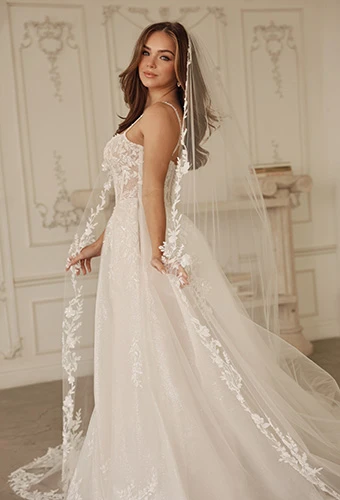
- Veils
- Bridal shoes
- Earrings and jewelry
- Hair accessories
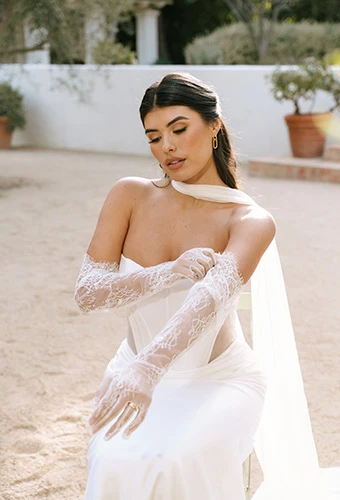
- Gloves
- Detachable sleeves or straps
- Overskirts
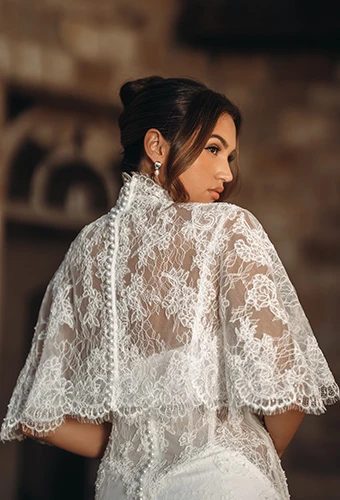
- Jackets, wraps or capes
Let the gown guide your accessory choices. The goal is not to add every accessory you love, it is to create a look where each piece feels intentional.
If your dress features intricate lace, dimensional appliques or elaborate beading, understated accessories can allow those details to remain the focus.
A clean or minimalist gown can become a striking canvas for a dramatic cathedral veil, statement earrings or a sculptural hair accessory.
When Should You Buy Your Wedding Shoes?
Try to choose your wedding shoes before the hem of your dress is finalized. Heel height can directly affect the finished gown length, so your alterations professional will need to know what height you plan to wear.
Think beyond appearance and consider:
- Heel height
- Comfort
- Ceremony terrain
- Time spent standing
- Dancing
If you plan to change into flats or sneakers later in the evening, ask how the change in height could affect your hem.
4-6 Months Before: Prepare for Your Gown to Arrive
This stage is often quieter, but there are still a few useful things to do.
Confirm the latest estimated arrival information with your boutique and begin preparing for the alterations phase. If your bridal boutique does not offer alterations, research an experienced bridal professional near you and ask about availability.
You should also finalize any pieces that may affect the gowns finished fit, particularly your shoes and any specific undergarments or shapewear you plan to wear.
2-3 Months Before: Begin Wedding Dress Alterations
Once your gown has arrived, the focus shifts from ordering to fit.
Most wedding dresses need some form of tailoring because gowns are typically ordered according to a designer’s size chart rather than your exact measurements.
Alterations can be as straightforward as adjusting a hem or as detailed as refining multiple areas of the gown. Your individual schedule will depend on the dress, the alterations required and your wedding date.
What to Bring to Wedding Dress Alterations
Bring any pieces that may affect the finished fit:
- Wedding shoes
- Planned undergarments
- Any shapewear, if wearing it
- Veil or important accessories
During a fitting, do more than stand in front of the mirror.
Make sure to walk, sit, raise your arms, turn around and take a few steps.
Your wedding dress should not only look beautiful, it should allow you to move comfortably through your ceremony, pictures, dinner and celebration.
When Should You Add a Bustle?
If your wedding dress has a train, ask your alterations professional whether you will need a bustle for the reception.
A bustle secures the train after the ceremony so you can move comfortably. The right bustle depends on the gown’s construction, fabric and train length.
Before your wedding day, make sure at least one trusted person knows how to secure your bustle.
1 Month Before: Finalize Your Bridal Look
With your wedding getting closer, now is the time when all the individual pieces start becoming one complete look.
Seeing everything styled together can reveal whether your look needs anything more, or whether it is already complete.
About a month before the wedding:
- Complete remaining wedding dress fittings
- Finalize veil and accessories
- Practice walking in your wedding shoes
- Confirm pickup arrangements
- Learn how your gown fastens
- Make sure someone understands any detachable elements and can assist you on your wedding day
- Confirm how the bustle works
If permitted, take reference photos during a fitting. They can help you and your wedding party remember how closures, straps or bustle points should look.
1-2 Weeks Before: Pick Up and Store Your Wedding Dress
Before leaving with your finished gown, give yourself time to check the details.
Look at:
- Overall fit
- Hem
- Closures
- Bustle
- Detachable pieces
- Accessories
Then ask how your particular gown should be stored until the wedding.
Fabric, weight and construction can all affect proper gown care, so follow the recommendations from your bridal boutique or alterations professional.
Wedding Day: Give Yourself Time to Get Dressed
After months of planning, give the final bridal look time to come together.
Complete most of your hair and makeup before putting on your wedding dress, and keep makeup, food and drinks away from the gown while getting dressed.
Allow extra time if your gown has:
- Corsetry
- Multiple layers
- Detailed buttons
- Detachable pieces
- Complex closures
Have the person helping with your gown nearby, along with a small fashion emergency kit.
Most importantly, take a moment to admire your complete look.
The wedding dress you researched, tried on, ordered and watched become uniquely yours is finally part of the day you have been planning.
Starting Wedding Dress Shopping Late? Here’s What to Do
An ideal wedding dress shopping timeline is helpful, but it is not a requirement.
If you have fewer than 12 months before the wedding, start with the time you have rather than worrying about the months already behind you.
If the timeline itself is starting to make dress shopping feel overwhelming, read why wedding dress shopping may be less stressful than you expect. An honest conversation with your boutique and stylist can quickly turn uncertainty into a more manageable plan.
Wedding Dress Shopping 9 Months Before the Wedding
If your wedding is nine months away, begin shopping as soon as possible.
Prioritize:
- Booking bridal appointments
- Sharing your wedding date immediately
- Asking which designers can realistically meet your timeline
- Confirming delivery expectations before ordering
- Planning ahead for alterations
Depending on the designer and boutique, you may still have a broad range of wedding dress options.
Wedding Dress Shopping 6 Months Before the Wedding
Six months can still offer meaningful possibilities, but flexibility becomes more important.
Ask your bridal boutique about:
- Gowns that can arrive within your timeframe
- Available rush options
- In-stock wedding dresses
- Sample gowns available for purchase
- Styles that may work well with your alterations schedule
Tell your stylist the wedding date before trying on gowns so they can guide you toward realistic options.
Wedding Dress Shopping 3 Months Before the Wedding
If your wedding is three months away or less, focus first on dresses that are already available.
Ask about:
- In-stock gowns
- Sample wedding dresses
- Off-the-rack options
- Store sale events
- Dresses requiring fewer extensive alterations
At this stage, availability and alterations should be part of the same conversation.
A shorter timeline may change how you shop, but it does not have to change your personal style.
Does Your Wedding Dress Shopping Timeline Change for Different Brides?
The overall timeline can stay similar, but certain gowns, body proportions and wedding plans may create additional considerations.
Petite Brides
Think about proportion, bodice length, waist placement and alteration complexity. Ask which design details are easiest to preserve when adjusting the gown for your frame.
Plus-Size Brides
Prioritize boutiques that carry sample gowns in sizes you can comfortably try. Calling ahead can help you understand the range of sizes and designers available before your appointment.
The EveryBody/EveryBride program offers best-selling Essense of Australia and Stella York wedding dresses in sizes 18 to 34/36 through participating retailers with a broader selection of samples.
Boho Brides
If your look involves statement lace, textured fabrics, sleeves, capes or other distinctive styling pieces, give yourself time to explore the complete look rather than focusing only on the gown.
Destination Brides
Build travel logistics into your dress timeline. Transportation, storage, steaming and climate should all be considered before wedding week.
Brides Planning Multiple Wedding Looks
If you are wearing an overskirt, detachable sleeves, reception gown or another transformation piece, plan the looks together.
Think about how the transition will happen, how long it will take and who will help you change each element.
Find Your Wedding Dress on Your Timeline
A wedding dress shopping timeline should make planning easier, not create another stressful deadline.
Starting around 12 months before your wedding day generally gives you the most flexibility, but the best first step at any point in your engagement is the same: know your wedding date, understand your priorities and work with a bridal stylist who can help you explore the options available to you.
There are practical decisions along the way, from ordering timelines and shoes to fittings and transportation. There are also moments you may remember long after the wedding, like discovering a silhouette you never expected to love, seeing yourself in a veil for the first time and watching the complete bridal look come together.
Whenever your wedding dress shopping journey begins, make it your own.
Explore our designer wedding dress collections, then use our Store Locator to find an authorized bridal retailer near you and experience your favorite gowns in person.
Wedding Dress Shopping Timeline FAQs
We recommend beginning wedding dress shopping 12 months before your wedding. Starting early gives you more flexibility for appointments, ordering, accessories and alterations.
A general goal is to order your wedding dress around 9 to 12 months before the wedding. Exact times vary by designer, gown and boutique, so always confirm your timeline before ordering.
No. Starting around a year before the wedding can give you more time to explore styles and make a confident decision without feeling rushed.
Possibly. Tell your bridal boutique your wedding date immediately so your stylist can guide you toward gowns and ordering options that may work within your timeframe.
It can help, but it is not required. Knowing your venue gives you useful context for weather, terrain and the overall feeling of the celebration, while your personal style should remain the priority.
Many brides begin alterations 2 to 3 months before the wedding, but the exact schedule depends on the gown and the work required. Follow the timeline recommended by your bridal alterations professional.